Latest News
- Wuxi's Nanchang Street--a historic cultural district that combines classical charm, delicious food, and fun activities
- chinese study
- lastest courses
- Business Assistance/International Consortium of Stem Cell Research
- Foreigner's view of Jiangsu -Changzhou Jintan starts
- estimonials for Our new French Internship student Anais 企业表扬信
- The Double Seventh Festival in China Introduction
- Chinese Proficiency Test (HSK)
- China University Mining and Technology
- Wuxi Library
Students Say

Mandarin Student Zack
Mandarin Education School is a great place to learn Chinese and Chinese Culture.I've learned a lot in this school, my Chine...

Learn Chinese Travel China
If you want to learn Chinese and also discover China, Mandarin Education organize the most funny and cultural study tour.
The...
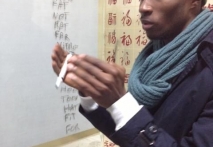
suzhou Mandarin Jude
I am Jude, I am learning Mandarin in Suzhou Mandarin School,I was learning in Wuxi Mandarin Education too.I like my Chinse Teacher...
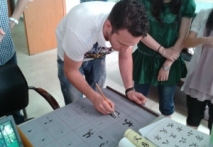
chinese class
Improve your reading, speaking and your writing by experiencing our teaching methods,Offer free student Visa.
...

Wuxi Mandarin Jessie
I've learned Chinese for almost 8 years, I can understand what Chinese people say,but when I speak, I feel very uncomfor...

Chinese Internship or Jobs
You are looking for a professional experience abroad? Get the opportunity to discover the Chinese business,Look for an ...

Mandarinedu Student Florent
I love my Wuxi Mandarin Education School. It is the EASY MANDARIN Learning way, I am learning faster than I wanted.My teach...

Mandarin E Learning
Mandarin Education School offers you Online Chinese Courses. It has never been so easier to have Chinese courses ...

Mandarin Student Brad
I am studying Chinese in Mandarin Education School. I can speak quit good Chinese and talk to Chinese people by myself. Thank...

Wuxi Mandarin edu. Student Jennifer
I love learning Chinese in Mandarin Education School.That's a great place to learn and make friends.
...
Add Our School Official
to get more informations

0086 1866 1199 988
0086 510-81151808
Sandy.Swun
519988808
Mandarin Education School
Room 405, 4 Fl,Building No.8,
Maoye Business Center,
Chang jiang No.1,
New district , Wuxi City , China
- Four reference dimensions: syllables, characters, words and grammar points serve as the baseline for measuring proficiency;
- Three evaluation dimensions: communicative ability, topic and task content, and quantitative language indicators;
- Five language skills: listening, speaking, reading, writing and translation.
- Levels 1-3 are the foundation. From 500 to 2,245 words, the coverage is everyday life and the most basic study needs.
- Level 4 is the first real threshold. 1,200 characters and 3,245 words roughly match the language entry requirement most Chinese universities set for undergraduate programmes.
- Level 6 is enough to work in. At 5,456 words you can read general workplace material and follow routine meetings.
- The advanced band is a big jump. Vocabulary roughly doubles from 5,456 to 11,092 words, and what gets added is mostly professional, occupational and academic register.
- Locate yourself first. Test against the graded word lists to find your actual level rather than estimating from past exam experience.
- Train characters and words separately. Recognition will always run ahead of production, but the standard sets an independent writing requirement (300 characters at elementary level), so do not only drill reading.
- Do not memorise 572 grammar points by rote. Work through them inside sentences; one pass in context beats ten passes on a list.
- Pick materials at your level. Reading slightly below your ceiling consistently beats struggling through material two levels above it.
"How far along am I?" is the question learners ask most, and the one that used to be hardest to answer. You could only go by feel: ordering food meant beginner, sitting through a meeting meant intermediate. That changed in 2021, when the Chinese Proficiency Standards for International Chinese Language Education (GF 0025-2021) put exact numbers on every level.
What the standard actually defines
The standard divides proficiency into three bands — elementary, intermediate and advanced — each split into three levels, giving the familiar "three bands, nine levels" structure. It rests on three ideas:
The totals across the four reference dimensions are:
| Element | Total |
|---|---|
| Syllables | 1,110 |
| Characters | 3,000 |
| Words | 11,092 |
| Grammar points | 572 |
Level-by-level table (cumulative)
The figures below are cumulative — they show everything a learner should have covered by the time they reach that level:
| Level | Syllables | Characters | Words | Grammar |
|---|---|---|---|---|
| Level 1 | 269 | 300 | 500 | 48 |
| Level 2 | 468 | 600 | 1,272 | 129 |
| Level 3 | 608 | 900 | 2,245 | 210 |
| Level 4 | 724 | 1,200 | 3,245 | 286 |
| Level 5 | 822 | 1,500 | 4,316 | 357 |
| Level 6 | 908 | 1,800 | 5,456 | 424 |
| Levels 7-9 | 1,110 | 3,000 | 11,092 | 572 |
How to read the table
The numbers make far more sense once you place them against real situations:
Turning numbers into targets
The most practical thing about this standard is that it makes goals checkable. "I want to improve my Chinese" cannot be verified. "I want to move from 2,245 to 3,245 words this quarter" can.
Mandarin Edu has rebuilt its HSK preparation syllabus around these quantitative indicators. Every student starts with a vocabulary and character assessment that determines both the starting point and the target level. If you would like to know which of the nine levels you currently sit at, book a free assessment with us.
Ready to plan your Chinese learning?
Mandarin Edu runs centres in Wuxi, Changzhou and Suzhou, offering HSK preparation, Business Chinese, corporate training and short-term study programmes. First consultation is free.
