Latest News
- Wuxi's Nanchang Street--a historic cultural district that combines classical charm, delicious food, and fun activities
- chinese study
- lastest courses
- Business Assistance/International Consortium of Stem Cell Research
- Foreigner's view of Jiangsu -Changzhou Jintan starts
- estimonials for Our new French Internship student Anais 企业表扬信
- The Double Seventh Festival in China Introduction
- Chinese Proficiency Test (HSK)
- China University Mining and Technology
- Wuxi Library
Students Say

Mandarin Student Zack
Mandarin Education School is a great place to learn Chinese and Chinese Culture.I've learned a lot in this school, my Chine...

Learn Chinese Travel China
If you want to learn Chinese and also discover China, Mandarin Education organize the most funny and cultural study tour.
The...
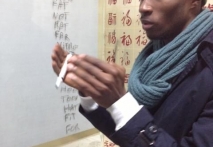
suzhou Mandarin Jude
I am Jude, I am learning Mandarin in Suzhou Mandarin School,I was learning in Wuxi Mandarin Education too.I like my Chinse Teacher...
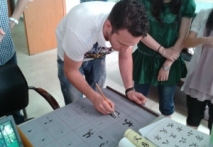
chinese class
Improve your reading, speaking and your writing by experiencing our teaching methods,Offer free student Visa.
...

Wuxi Mandarin Jessie
I've learned Chinese for almost 8 years, I can understand what Chinese people say,but when I speak, I feel very uncomfor...

Chinese Internship or Jobs
You are looking for a professional experience abroad? Get the opportunity to discover the Chinese business,Look for an ...

Mandarinedu Student Florent
I love my Wuxi Mandarin Education School. It is the EASY MANDARIN Learning way, I am learning faster than I wanted.My teach...

Mandarin E Learning
Mandarin Education School offers you Online Chinese Courses. It has never been so easier to have Chinese courses ...

Mandarin Student Brad
I am studying Chinese in Mandarin Education School. I can speak quit good Chinese and talk to Chinese people by myself. Thank...

Wuxi Mandarin edu. Student Jennifer
I love learning Chinese in Mandarin Education School.That's a great place to learn and make friends.
...
Add Our School Official
to get more informations

0086 1866 1199 988
0086 510-81151808
Sandy.Swun
519988808
Mandarin Education School
Room 405, 4 Fl,Building No.8,
Maoye Business Center,
Chang jiang No.1,
New district , Wuxi City , China
- Second and fourth tone blur together. One rises, one falls, but speakers of non-tonal languages tend to hear both as some kind of stress rather than as pitch direction.
- The third tone is not pronounced as textbooks show it. In isolation it is a full 214 — down then up — but inside words and sentences it is usually only the falling half (the so-called half third tone). Without that note, learners follow the book faithfully and still sound odd.
- Tone stacks with intonation. Questioning, surprise or impatience sit on top of the lexical tones. Single syllables go fine; real conversation collapses.
- Train discrimination before production. Until you can hear 35 versus 51, imitation only repeats the error. Listening accuracy develops first.
- Use your hand as a visual anchor. First tone flat, second rising, third falling then rising, fourth cutting down — letting your hand carry the contour frees the mouth considerably.
- Drill minimal pairs. Practise words that differ only in tone — mā/mà, mǎi/mài, bā/bà — rather than working down a vocabulary list.
- Go into phrases and sentences, then return to single syllables. Tone is realised in the stream of speech; the goal is stability inside a continuous sentence.
- Record and listen back. The biggest blind spot for adults is the gap between what you hear yourself say and what others hear. Thirty seconds a day for two weeks usually produces a noticeable change.
Almost every adult learner gets stuck on tones at some point. Individual syllables sound fine, but connected speech still draws blank looks. Or you are convinced you sound correct, then hear a recording and barely recognise it. That is not a talent problem — it is a method problem.
Tone is part of the meaning, not decoration
In Chinese, the same initial and final with a different tone gives a completely different word. Take the syllable ma:
| Tone | Example | Meaning |
|---|---|---|
| First | mā 妈 | mother |
| Second | má 麻 | hemp; numb |
| Third | mǎ 马 | horse |
| Fourth | mà 骂 | to scold |
Tone is therefore not an accent detail you can postpone. It is a necessary component of the word, just like the initial and the final.
The pitch values of the four tones
Phonetics conventionally describes tone using a five-level pitch scale, dividing relative pitch into five degrees from 1 (lowest) to 5 (highest) and expressing the contour as a sequence of numbers.
| Tone | Name | Pitch value | Example |
|---|---|---|---|
| First | yinping | 55 | mā 妈 |
| Second | yangping | 35 | má 麻 |
| Third | shangsheng | 214 | mǎ 马 |
| Fourth | qusheng | 51 | mà 骂 |
Alongside the four main tones there is the neutral tone — short, light, with no fixed contour. It appears in the second syllable of words like māma 妈妈 or the zi in zhuōzi 桌子. It occurs constantly in speech and is a major reason learners feel they understand everything yet never sound quite right.
Three difficulties specific to adult learners
A training path that works
How long it takes
Listening discrimination improves fastest — a few weeks of focused practice is often enough to feel the difference. Stable production takes longer, and depends far more on frequency than on session length. Fifteen minutes daily with feedback clearly beats two hours once a week.
Mandarin Edu breaks tone work into four gates — discrimination, imitation, connected speech, playback — and clears them one at a time, logging each learner’s error patterns for targeted correction. If your tones have stayed unstable despite study, come in for a pronunciation diagnostic.
Ready to plan your Chinese learning?
Mandarin Edu runs centres in Wuxi, Changzhou and Suzhou, offering HSK preparation, Business Chinese, corporate training and short-term study programmes. First consultation is free.
