学习心得
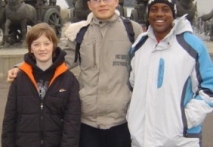
Jude, étudiant de Mandarin Edu de Suzhou
Jude, étudiant de Mandarin Edu de Suzhou
Je m'appelle Jude, j'apprends le Mandarin à Suzhou Mandarin Sch...
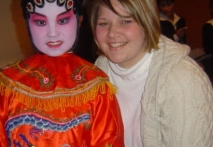
Jessie, étudiante à Mandarin Edu
Jessie, étudiante à Mandarin Edu
J'ai appris le Chinois presque 8 ans, je peux comprendre ce que les Chi...
Florent, étudiant à Mandarin Edu
Florent, étudiant à Mandarin Edu
J'adore Mandarin Education School de Wuxi. C'est la manière LA PLUS FA...

Le vent en langue Brad élèves
Le vent en langue Brad élèves
Je suis en train d'étudier le Chinois à Mandarin Education School. Je peux...
Jennifer, étudiante à Mandarin Edu
Jennifer, étudiante à Mandarin Edu
J'adore apprendre le Chinois à Mandarin Education School. C'est un en...
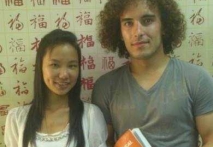
Zack, étudiant à Mandarin Edu
Zack, étudiant à Mandarin Edu
Mandarin Education School est une place très adaptée à l'apprentissage du ...
Kevin, étudiant à Mandarin Edu
Kevin, étudiant à Mandarin Edu
Mandarin Education School est un endroit excellent pour apprendre le chin...

Mandarin E-Learning
Mandarin E-Learning
Mandarin Education School offre des cours de Chinois en ligne. Cela n'a jamais été aussi facil...

法语汉语学习
...
Ajoutez notre
Identifiant Officiel
Wechat : MandarinGroup
Pour plus d'informations

0086 1866 1199 988
Sandy.Swun
519988808
Mandarin Education School
Room 405,Building 8,Maoye
Business Centre,Changjiang
No.1,New District,Wuxi, China
The cradle of Wuxi Opera Yanjiaqiao Village
Historical!
During the Daoguang period of the Qing Dynasty, there were a couple of celebrated Tanhuang players in Yanjiaqiao village of Yangjian Town, the male was called Jin Qiao and the female was called Qing Bao. Jin Qiao was so clever that he could sing the Tanhuang composed by himself affected by his father, who had passion on opera and urheen.
Jin Qiao was an energetic young man and sang Tanhuang in Yangjiaqiao Village the every second lunar month. At the age of 18, he married a local girl called Qing Bao, who was famous for her rotund voice. In the third year of Xianfeng (1853), the couple both played on the stage after making up. Afterwards, Jin Qiao played the female role in his self-written vulgar opera to satirize the governing class with low vocal cavity, thus changing the former loud tone to the soft new tone and has been spread up to now.
During the later years of Guangxu, Bai Qiurong, a bachelor from Changzhou who had failed in an imperial examination, rewrote the lyrics and chapters of the vulgar opera, which became the 18 traditional operas of Wuxi Opera. In this kind of Tanhuang, there were a male character, a female role, supporting roles and the stringed-instrument players. The male character and the female role played as a couple on the stage after making up, gradually developed from the amateur groups to professional or semi-professional groups. On this basis, these traditional operas were developed into singing plays in Changzhou and Wuxi, and changed into Wuxi Opera later.
